

A fresh coat of paint can give kitchen cabinets a clean, updated look without the cost of a full remodel. Choosing the right type of paint makes all the difference in how long the finish lasts and how smooth the surface looks. The best paint for kitchen cabinets is a high-quality enamel or acrylic latex paint that resists stains, moisture, and daily wear.
Not all paints hold up well in a busy kitchen. Cabinets face grease, spills, and constant use, so the paint must be durable and easy to clean. Picking the right finish, such as satin, semi-gloss, or gloss, also affects both the look and maintenance of the cabinets.
With the right choice, cabinets can stay beautiful for years and handle the demands of everyday cooking and cleaning. The following guide explains what to look for and how to make the best decision for a long-lasting cabinet makeover.
Key Takeaways
- The right paint type creates a durable and smooth cabinet finish
- Finish choice affects both appearance and ease of cleaning
- Careful selection ensures cabinets stay attractive for years
Choosing the Best Paint for Kitchen Cabinets
The best paint for kitchen cabinets depends on the type of formula, the quality of the brand, and the finish that suits the space. Each factor affects durability, appearance, and ease of maintenance.
Types of Paint for Kitchen Cabinets
Cabinet paint comes in several formulas, each with strengths and weaknesses. Oil-based paint levels smoothly and resists wear, but it has strong fumes and longer drying times. Latex paint is easier to clean up and has a lower odor, though it may not cure as hard as oil.
Water-based paint is popular because it dries quickly and produces fewer VOCs. Hybrid paints, such as waterborne alkyds, combine the hardness of oil-based paint with the easy cleanup of water-based paint. Acrylic paint offers good color retention and flexibility, making it less likely to crack over time.
For most kitchen cabinets, hybrid or waterborne alkyd paints give the best balance of durability and convenience. They resist yellowing, unlike traditional oil-based formulas, and they cure to a hard finish that handles daily use.
Recommended Paint Brands and Products
Several brands make paints designed for cabinets. Benjamin Moore Advance is a waterborne alkyd that provides a smooth, durable finish with easy soap-and-water cleanup. Sherwin-Williams Emerald Urethane Trim Enamel is another hybrid option that resists stains and chips while leveling well on cabinet surfaces.
Insl-X Cabinet Coat is a water-based enamel made specifically for kitchen cabinets and furniture. It adheres without a separate primer on most surfaces and cures to a strong, washable finish.
When choosing a product, it helps to compare features:
| Paint Product | Type | Key Benefit |
|---|---|---|
| Benjamin Moore Advance | Waterborne Alkyd | Hard, durable finish |
| Sherwin-Williams Emerald Urethane | Hybrid | Smooth leveling, stain resistance |
| Insl-X Cabinet Coat | Water-based enamel | Strong adhesion without primer |
These paints are widely recommended because they combine durability with finishes that stay attractive under frequent cleaning.
Selecting the Right Paint Finish
The finish of cabinet paint affects both appearance and maintenance. A satin finish offers a soft sheen that hides minor flaws while still being easy to clean. A semi-gloss finish is one of the most common choices, balancing durability with a brighter look.
A matte finish is less practical for kitchen cabinets since it shows grease and fingerprints more easily. A high-gloss finish provides a sleek, reflective surface but highlights imperfections and requires careful preparation.
Most homeowners prefer satin or semi-gloss finishes for kitchen cabinets. These finishes resist moisture, hold up to scrubbing, and give cabinets a polished look without being overly shiny.
Key Considerations for a Durable and Beautiful Cabinet Makeover
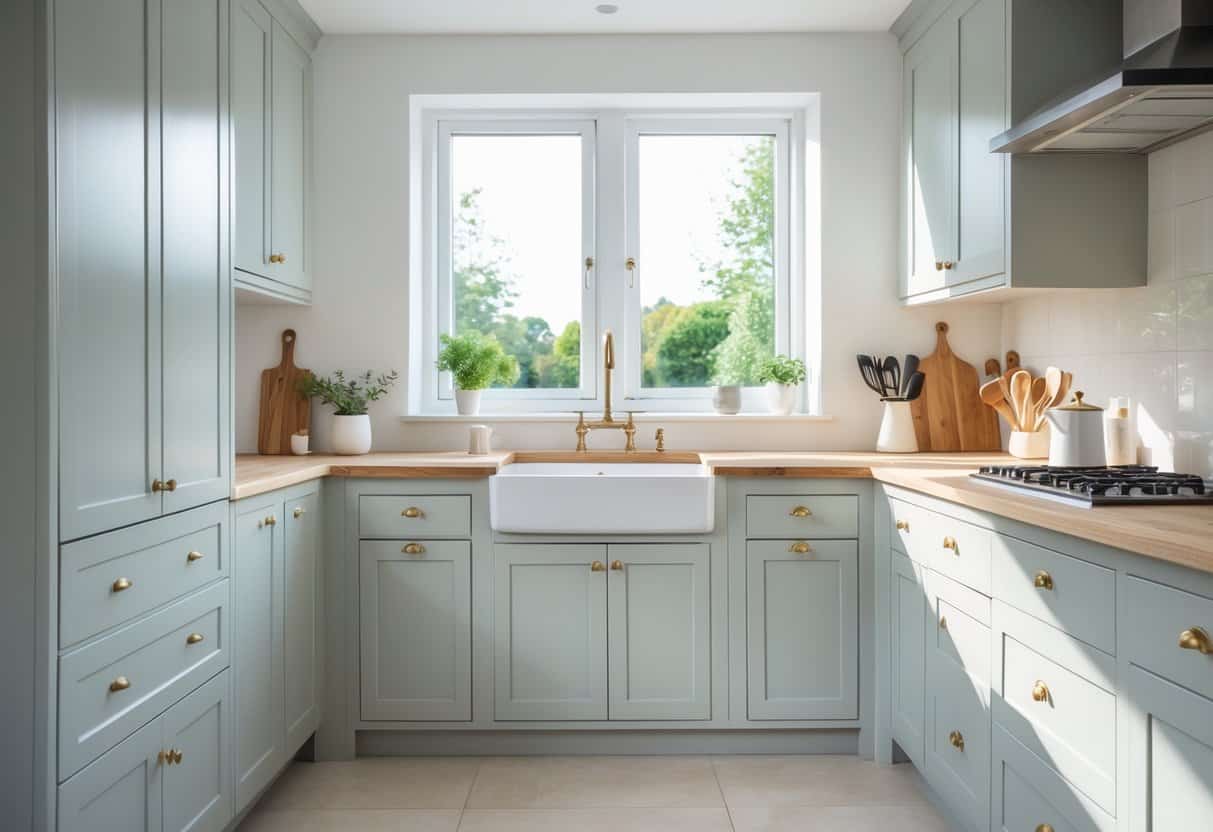
A kitchen cabinet makeover requires more than just choosing a color. The type of paint, how it is applied, and the preparation steps all affect how well the finish holds up to daily use.
Durability and Longevity
Cabinets face constant handling, so durability is one of the most important factors. High-quality acrylic or alkyd paints resist chipping and scratching better than standard wall paint. These options also provide a smoother finish that lasts longer.
A protective topcoat adds another layer of defense. Polyurethane or water-based clear coats protect against moisture and grease, which are common in kitchens. Without this step, even strong paints may wear down faster.
Paint sheen also affects longevity. Semi-gloss and satin finishes often perform better than flat finishes because they resist stains and scuffs. While glossy finishes last longer, they may highlight imperfections in the wood.
For cabinets made of softer woods, applying wood filler to cracks or dents before painting prevents weak spots from showing through. This step improves both appearance and durability.
Ease of Cleaning and Maintenance
Cabinets collect grease, dust, and fingerprints. Paint that allows easy cleaning saves time and keeps the surface looking fresh. Semi-gloss and satin finishes are usually the best choices because they wipe clean with mild soap and water.
Flat or matte finishes may look smooth, but absorb stains more easily. They also require more effort to clean without damaging the surface.
A protective topcoat again plays a role here. It creates a barrier that resists water spots and food splatters. This makes maintenance simpler and prevents the need for frequent touch-ups.
Regular cleaning with non-abrasive cloths helps extend the life of the finish. Harsh cleaners or scrubbing pads can dull or scratch the surface, even on durable paints.
Application Methods and VOC Content
How the paint is applied affects both the look and performance. Spraying usually gives the smoothest finish with fewer visible brush marks. Rolling and brushing are more accessible but may leave a slight texture.
For homeowners doing the work themselves, choosing the right application method depends on skill and the tools available. Sprayers require more setup and ventilation but provide professional results.
VOC content is another factor. Low-VOC or zero-VOC paints reduce strong odors and improve indoor air quality. This is especially important in kitchens where ventilation may be limited.
Oil-based paints often have higher VOC levels but provide a harder finish. Water-based paints are safer to use indoors and dry faster, though they may need a protective topcoat for extra strength.
Preparation and Finishing Steps
Good preparation ensures the paint bonds properly. Cabinets should be cleaned with a degreaser to remove oils and residue. Sanding smooths the surface and helps the primer adhere.
Using a high-quality primer prevents stains from bleeding through and creates a solid base for the paint. Skipping this step often leads to peeling or uneven coverage.
After painting, a protective topcoat adds durability and makes cleaning easier. This is especially useful in high-traffic areas near sinks, stoves, and handles.
Final touches such as reattaching hardware, filling gaps with wood filler, and checking for smooth edges complete the project. Careful finishing steps make the difference between a short-term update and a lasting cabinet makeover.
Frequently Asked Questions
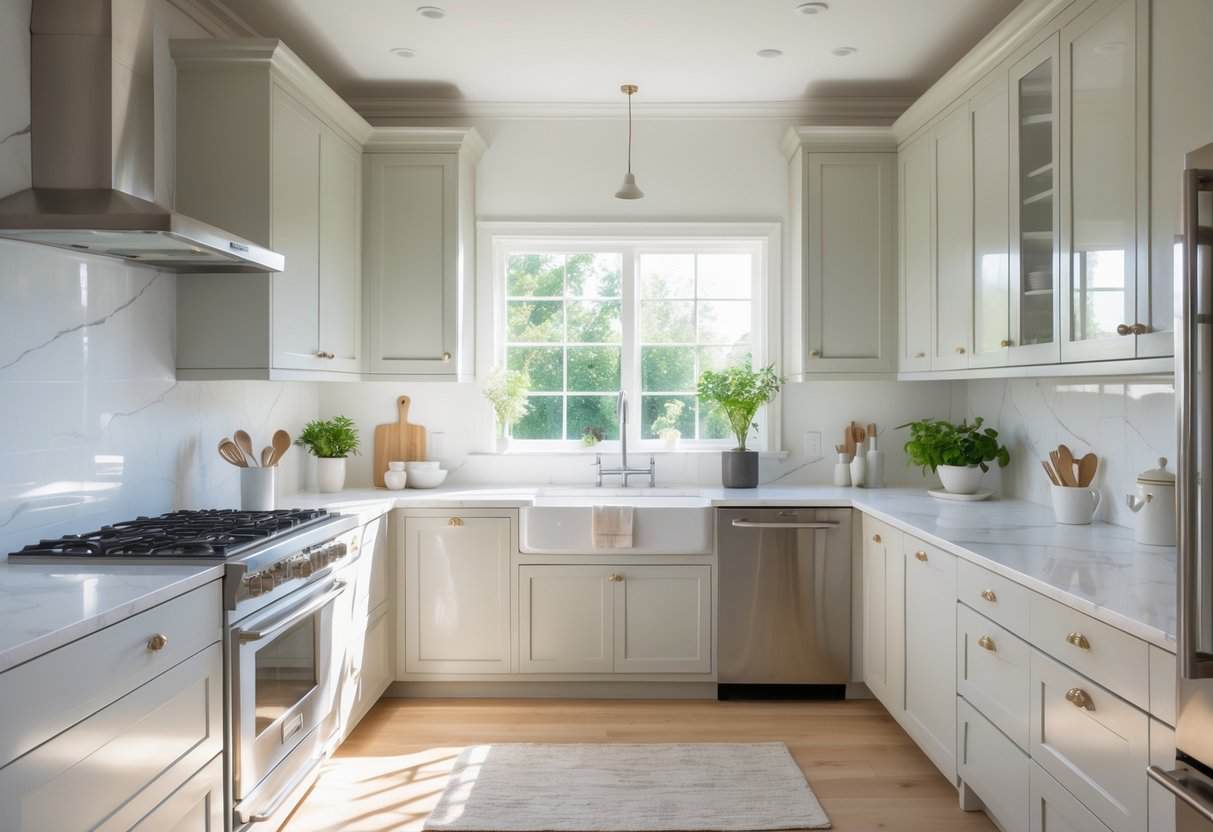
Durability, surface preparation, and paint sheen all affect how long kitchen cabinets look good and hold up to daily use. Choosing the right combination helps prevent chipping, peeling, and early wear.
What type of paint ensures the highest durability for kitchen cabinets?
Acrylic enamel paint provides strong durability and resists chipping. Oil-based paints also offer a hard finish but take longer to dry and can yellow over time. Many homeowners prefer water-based acrylics because they cure to a tough surface while being easier to clean up.
How do I prepare my kitchen cabinets for painting to ensure the best finish?
Cabinets should be cleaned with a degreaser to remove oils and residue. Sanding the surface lightly helps the paint stick better. Applying a high-quality primer creates a smooth base and reduces the chance of peeling or uneven coverage.
What sheen of paint is most suitable for kitchen cabinets to resist wear and tear?
Semi-gloss and satin sheens work best for cabinets. These finishes resist moisture and stains while being easier to wipe clean. Flat or matte finishes are less durable and show marks more easily, making them less practical for high-use areas like kitchens.
